Estimated reading time: 7 minutes
Why Google Is the World’s Default Background Checker
A staggering 94% of people conduct online research before doing business with someone. Whether you’re applying for a job, closing a business deal, launching a brand, or dating, odds are the other party is running a Google background check on you.
Google doesn’t just reflect your online presence. It defines it. First impressions have moved from handshakes to hyperlinks.
What Is a Google Background Check?
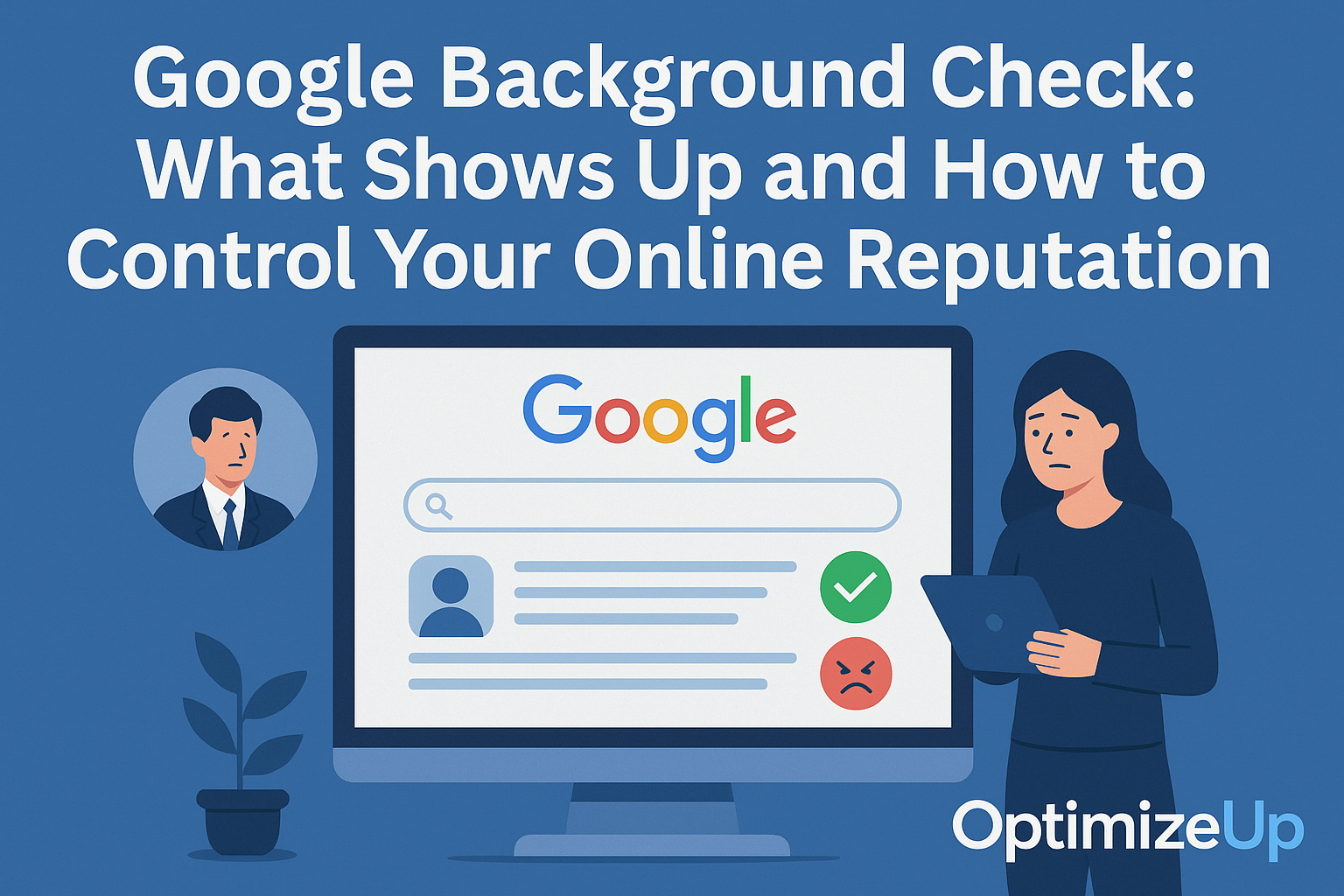
A Google background check is an informal yet highly influential process where someone searches your name on Google to assess your credibility, reputation, and past. Unlike a formal criminal background check, Google searches offer a blend of:
- News articles
- Social media profiles
- Blog posts and comments
- Images and videos
- Old forum posts
- Reviews or complaints
- Public records
- Mugshots or legal filings
- Academic mentions or sports results
- Business registrations and licenses
This mixed bag can unfairly misrepresent you—especially when outdated or harmful content ranks high. It’s important to remember that most people rarely verify the accuracy or context of what they find. Their impression is formed in seconds.
What Typically Appears in a Google Background Check?
Here are the most common types of search results that show up:
1. Social Media Profiles
LinkedIn, Facebook, X (formerly Twitter), and Instagram profiles are often the top-ranking results. What you post—and what others post about you—can shape perceptions.
2. Public Records
Court documents, business filings, voter registrations, marriage or divorce records, and property deeds may be indexed. Some of this data gets aggregated by people search engines like Spokeo, Whitepages, or TruthFinder.
3. News Mentions
Local or national news stories can linger for years. A single report—even if it’s inaccurate—can dominate page one.
4. Review Sites
Glassdoor, Yelp, Ripoff Report, and the Better Business Bureau may hold negative reviews about you or your business. These reviews often outrank your owned assets.
5. Images and Videos
Google Images and YouTube are powerful indexing platforms. A viral or controversial image can outrank your own website.
6. Old Content or Forums
Outdated blogs, Reddit posts, MySpace pages, or obscure forum comments from a decade ago may still rank.
7. Mugshots and Legal Documents
Some aggregator sites publish mugshots, lawsuits, or judgments—regardless of outcome. Even if you were never convicted, the content may remain indefinitely.
8. Obituaries or Family Mentions
Your name could appear in family obituaries or wedding announcements, providing strangers with more personal context than you’d expect.
How a Negative Google Result Can Harm You
A single damaging result can:
- Cost you job opportunities
- Sabotage a business pitch
- Destroy personal relationships
- Lead to character judgment
- Undermine trust in your brand
- Influence jury selection or legal proceedings
Negative results often appear out of context. Worse, Google may prioritize them due to authority or traffic, not truth.
“First impressions are now made on search engines, not in person.” — Optimize Up
What Makes Google Rank Certain Results Higher?
Google’s algorithm prioritizes content based on:
- Relevance to the search query
- Authority of the website
- Freshness and engagement
- Number and quality of backlinks
- Click-through rates (CTR)
- Use of structured data (schema markup)
Additionally, if content receives a high volume of traffic, comments, or shares, it may be interpreted as valuable—even if it’s misleading or harmful.
Can You Remove Bad Google Search Results?
Sometimes. It depends on:
- The source: Is it from a government site, news outlet, or blog?
- Legal grounds: Is the information false, defamatory, or a violation of privacy?
- Platform policies: Does the content breach any terms of service?
Options include:
- Request removal via Google’s Removal Tool
- Contact the webmaster directly to request takedown or modification
- File a legal complaint for defamation, invasion of privacy, or right to be forgotten (especially in the EU)
- Use suppression strategies to bury negative links
Keep in mind that once content is published on the internet, it can be mirrored, syndicated, or cached. That’s why proactive control is critical.
The Best Strategies to Control a Google Background Check
1. Audit Your Google Presence
Search your name, including variations, maiden names, and usernames. Use:
- Google Search (including News, Images, Videos, Maps)
- DuckDuckGo and Bing (which may show alternate results)
- Incognito or private browsing mode
Document everything using screenshots. Create a benchmark.
2. Claim and Optimize Social Profiles
Google prioritizes verified and complete profiles. Maintain consistent photos, bios, and name usage across:
- YouTube
- X (Twitter)
- Crunchbase
- About.me
- Medium
Link between profiles to create a content web. Use your real name in handles and profile URLs.
3. Create High-Authority Content
Own your narrative. Ideas include:
- A personal portfolio or blog on your own domain
- Guest posts on respected sites in your industry
- Public speaking videos on YouTube
- Thought leadership posts on LinkedIn
- Interviews or podcast guest appearances
This content will push harmful results off page one over time.
4. Remove What You Can
It never hurts to ask. Tactics include:
- Filing abuse complaints on social platforms
- Contacting site admins directly
- Requesting updates, corrections, or anonymization
Use WHOIS lookup tools to find site owners and email them respectfully.
5. Push Down Negativity with SEO
Reverse SEO is key:
- Publish weekly content targeting your name + profession
- Optimize metadata (title tags, alt tags, headers)
- Build backlinks through guest posts, directories, and citations
- Use structured data (e.g., schema.org/Person) to enhance visibility
- Encourage positive reviews and testimonials
This can transform your online landscape in 6–12 months.
6. Monitor and Maintain
Set Google Alerts for:
- Your full name
- Your business name
- Common misspellings
- Competitors or accusers (to track smear campaigns)
Consider reputation monitoring tools like BrandYourself, Mention, or Google’s own Alert platform.
7. Work with Reputation Experts
Situations that benefit from professionals:
- Time-sensitive issues (e.g., job interviews, IPOs, lawsuits)
- Legal complexity
- High-volume attacks or campaigns
- Personal crises with press coverage
Expert firms offer SEO teams, legal access, and removal experience.
Google vs Traditional Background Checks
| Feature | Google Background Check | Formal Background Check |
|---|---|---|
| Access | Public | Requires permission or legal grounds |
| Cost | Free | Often paid |
| Scope | Broad (news, reviews, etc.) | Narrow (criminal, credit, etc.) |
| Influence | High | Moderate |
| Fixability | Possible via SEO/legal | Limited |
Traditional checks are restricted to what’s legally accessible. Google finds everything else.
Who’s Most At Risk?
Some professions are especially vulnerable:
- Doctors and attorneys: Subject to review platforms and public databases
- Real estate agents: Client reviews, licensing boards, and Zillow ratings
- Executives and founders: News articles, SEC filings, and investor scrutiny
- Students and job seekers: Employers Google candidates before interviews
- Teachers and educators: Accusations, parent complaints, or press
- Influencers and creatives: Everything is online—good or bad
Even private individuals can be impacted by revenge sites, harassment, or mistaken identity.
Real Case Examples
Case 1: The Old News Story
A tech startup founder was haunted by a 2015 arrest report that didn’t lead to charges. After six months of SEO work, the report was buried beneath new content highlighting philanthropic work.
Case 2: The Bad Review Campaign
A small law firm received several one-star reviews from fake accounts. A reputation team flagged the fraud, reported the abuse, and rebuilt the firm’s rating with client testimonials and Google schema markup.
Case 3: Mugshot Aggregator Takedown
A man’s outdated mugshot appeared on multiple sites. Through legal requests and suppression efforts, his search results now focus on his real estate business and community work.
Case 4: Corporate Smear Attack
A competing business launched a slanderous blog campaign. An expert ORM firm built a high-authority blog, secured third-party media placements, and filed a DMCA takedown to restore brand trust.
Optimize Up’s Reputation Management Services
Optimize Up specializes in helping professionals and businesses reclaim their search results. Services include:
- Content removal and suppression
- Personal branding and asset building
- SEO optimization for positive media
- Crisis response and monitoring
- Google schema implementation and metadata repair
“We don’t just clean up the internet. We rewrite your story.”
Explore services at Optimize Up.
FAQ: Google Background Check & Reputation Management
A formal background check includes financial, criminal, and identity records. A Google background check is informal but reveals online reputation and public content.
Forever, unless removed or buried by stronger SEO content.
No. Google does not accept payment for content removal. Use their policy-based removal process.
It depends. Some see improvement in 30 days, but complex cases can take 6–12 months.
Absolutely. As long as methods follow platform policies and laws, online reputation management is legal.
No ethical firm guarantees removal unless it’s based on policy violation or legal precedent. But suppression strategies are highly effective.