What Is a Personal Branding Statement?
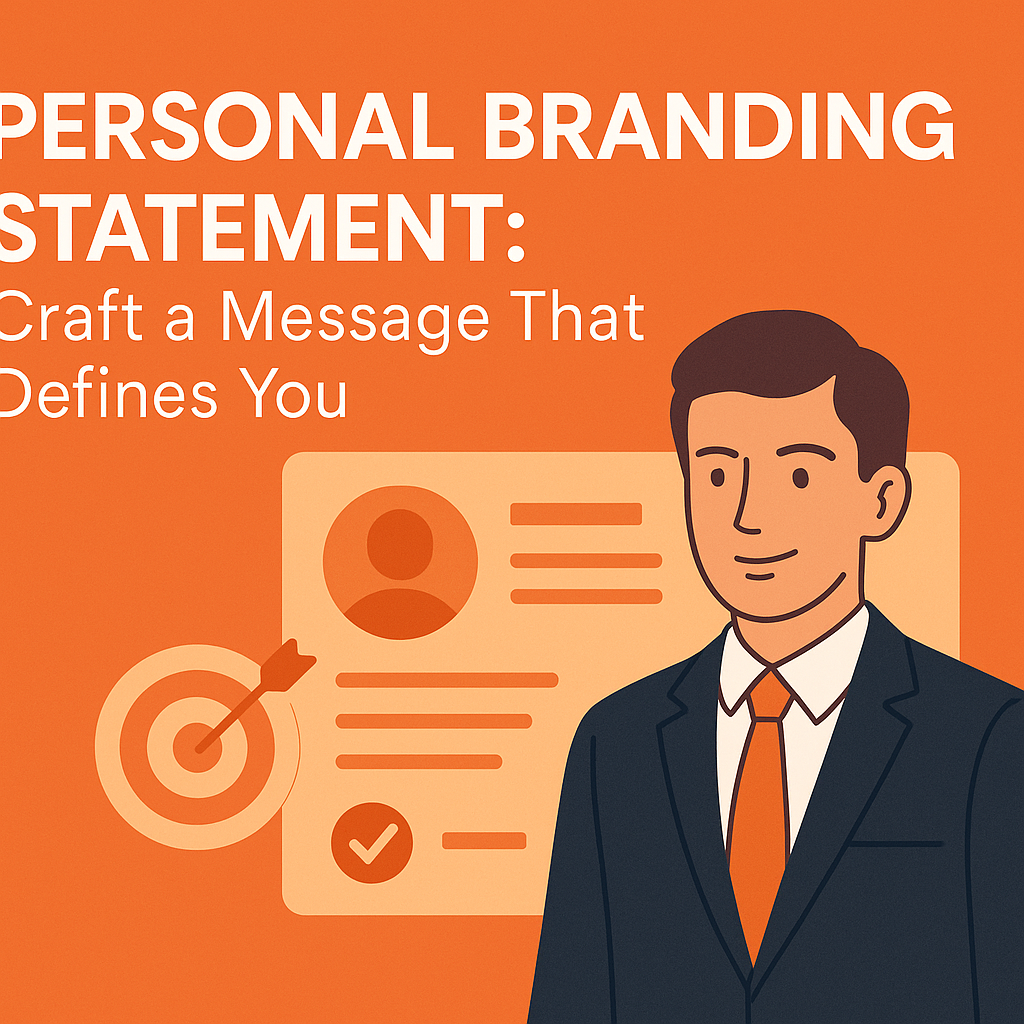
A personal branding statement is a concise summary that communicates who you are, what you do, and what makes you unique. It’s your professional identity boiled down into one impactful sentence or paragraph.
Think of it as your elevator pitch—sharper, bolder, and tailor-made for today’s competitive attention economy.
More than a résumé blurb, it signals value, authenticity, and confidence. A strong statement can position you as a thought leader, attract new opportunities, and make you unforgettable in your niche.
Why Personal Branding Statements Matter
Your personal branding statement is more than a tagline. It’s the anchor of your resume, LinkedIn bio, speaker introduction, and website headline.
Key Benefits:
- Clarifies your value proposition
- Builds credibility and trust
- Strengthens your online presence
- Makes networking more effective
- Differentiates you in saturated markets
- Signals focus and self-awareness to potential collaborators or employers
“Your personal brand is what people say about you when you’re not in the room.” — Jeff Bezos
In a competitive marketplace, clarity and authenticity are your biggest assets. A personal branding statement allows you to articulate your mission and build a loyal following that aligns with your values.
Anatomy of a Strong Personal Branding Statement
A compelling statement usually answers these three core questions:
- Who are you?
- What do you do exceptionally well?
- Who do you help, and what’s the result?
Formula You Can Use:
I help [target audience] achieve [specific outcome] by leveraging [your unique skills, approach, or experience].Or
[Your Name] is a [profession] who specializes in [expertise] to help [audience] [solve a problem or reach a goal].You can also build variations for different purposes:
- Short-form (social bio or business card): 10–15 words
- Long-form (LinkedIn About): 2–3 sentence summary
Examples of Personal Branding Statements
For Job Seekers:
“I help fast-growing startups scale their talent acquisition through inclusive hiring strategies and employer branding.”
For Entrepreneurs:
“A results-driven consultant who helps 6-figure coaches turn chaotic content into scalable systems that sell.”
For Creatives:
“Multimedia designer turning abstract ideas into bold, scroll-stopping visuals that drive conversion.”
For Thought Leaders:
“Sought-after keynote speaker inspiring organizations to lead with empathy and act with impact.”
For Executives:
“Transformational CFO with a track record of scaling growth-stage tech companies to acquisition and IPO.”
For Side Hustlers:
“Helping busy professionals launch profitable side businesses using content, strategy, and consistency.”
Step-by-Step Guide to Writing Yours
Step 1: Identify Your Strengths
Write down:
- Your top 5 skills
- 3 things people often ask your help with
- Past wins that made you proud
Use self-assessments like StrengthsFinder or Myers-Briggs to uncover your core traits.
Step 2: Define Your Audience
Ask:
- Who do I most want to work with?
- What industries, roles, or demographics benefit most from what I offer?
Clarifying your niche sharpens your messaging and attracts aligned opportunities.
Step 3: Clarify Your Value
Get specific:
- What is the transformation you deliver?
- How do your clients or employers feel after working with you?
Use action words like:
- Elevate
- Empower
- Streamline
- Drive
- Transform
Step 4: Keep It Human
Avoid corporate jargon or inflated buzzwords. Focus on clarity.
Instead of: “Results-oriented synergy specialist”
Say: “I help teams improve collaboration and exceed sales targets.”
Step 5: Polish and Test
- Read it out loud. Does it sound like you?
- Test it in networking conversations.
- Add it to your LinkedIn profile and see how people engage.
Where to Use Your Personal Branding Statement
- LinkedIn headline and About section
- Personal website homepage or About page
- Email signature
- Cover letter and résumé summary
- Press bios for media appearances
- Social media profiles
- Business cards
Every touchpoint is a chance to reinforce your message and make a strong impression.
Common Mistakes to Avoid
- Being too vague: “I’m a problem solver who gets things done.” What kind of problems? For whom?
- Using clichés: “Hardworking, passionate, results-driven.” Everyone says that. Go deeper.
- Making it all about you: Focus on your audience and what you do for them.
- Lacking personality: Inject a tone that reflects your brand—professional, playful, empathetic, strategic.
- Overloading it with titles: Don’t list roles. Communicate value.
How to Evolve Your Branding Statement Over Time
Your personal brand evolves as your career, skills, and priorities shift. Revisit your statement when:
- You pivot industries or target audiences
- You add new expertise or credentials
- You launch a business or product
- You notice your old message no longer excites you
Keep a version history to track your growth.
Resources to Help You Craft Your Statement
- LinkedIn Career Explorer: See how your skills align with potential opportunities
- Zety Resume Builder: Create a summary using AI suggestions
- Harvard i-lab Personal Brand Toolkit: For entrepreneurs and career changers
- OptimizeUp Brand Audit: Personalized strategy for positioning and visibility
OptimizeUp Can Help You Define and Promote Your Brand
At OptimizeUp, we specialize in shaping standout personal brands. Whether you’re a founder, executive, coach, or consultant, we’ll help you:
- Craft a compelling branding statement
- Optimize your online presence
- Position yourself as an authority in your niche
Get a free brand clarity consultation to refine your message and grow your influence.
Frequently Asked Questions
1–2 concise sentences. Think elevator pitch length, not a paragraph-long bio.
Yes. Tailor your message slightly based on the audience and context.
Every 6–12 months or after any major shift in your goals, industry, or role.
A tagline is shorter and punchier. A personal branding statement provides more context and communicates value.
Yes—especially if they help define your approach (e.g., empathetic, data-driven, strategic).
Absolutely. Focus on your potential, passion, and transferable skills. Highlight why you’re uniquely equipped for the next step.
MLA Citations
“The Importance of Personal Branding.” Forbes, https://www.forbes.com/sites/theyec/2022/05/13/the-importance-of-personal-branding/?sh=6b9e0db566c2. Accessed 13 May 2025.
“Crafting a Personal Brand Statement.” Harvard Business Review, https://hbr.org/2020/01/what-s-your-personal-brand. Accessed 13 May 2025.
“Jeff Bezos on Personal Branding.” Entrepreneur, https://www.entrepreneur.com/leadership/your-brand-is-what-people-say-about-you-when-youre-not/308452. Accessed 13 May 2025.
“Career Toolkit: Build Your Brand.” LinkedIn Learning, https://www.linkedin.com/learning/. Accessed 13 May 2025.