Estimated reading time: 6 minutes
Why Negative Search Results Matter More Than You Think
First impressions are now largely formed on search engines. A single unflattering article, false review, or outdated post appearing on the first page of Google can cost businesses leads, scare away employers, or ruin personal credibility. According to a Moz study, nearly 67% of clicks go to the top five search results. That means if a negative result is ranking high, it could dominate perceptions unfairly.
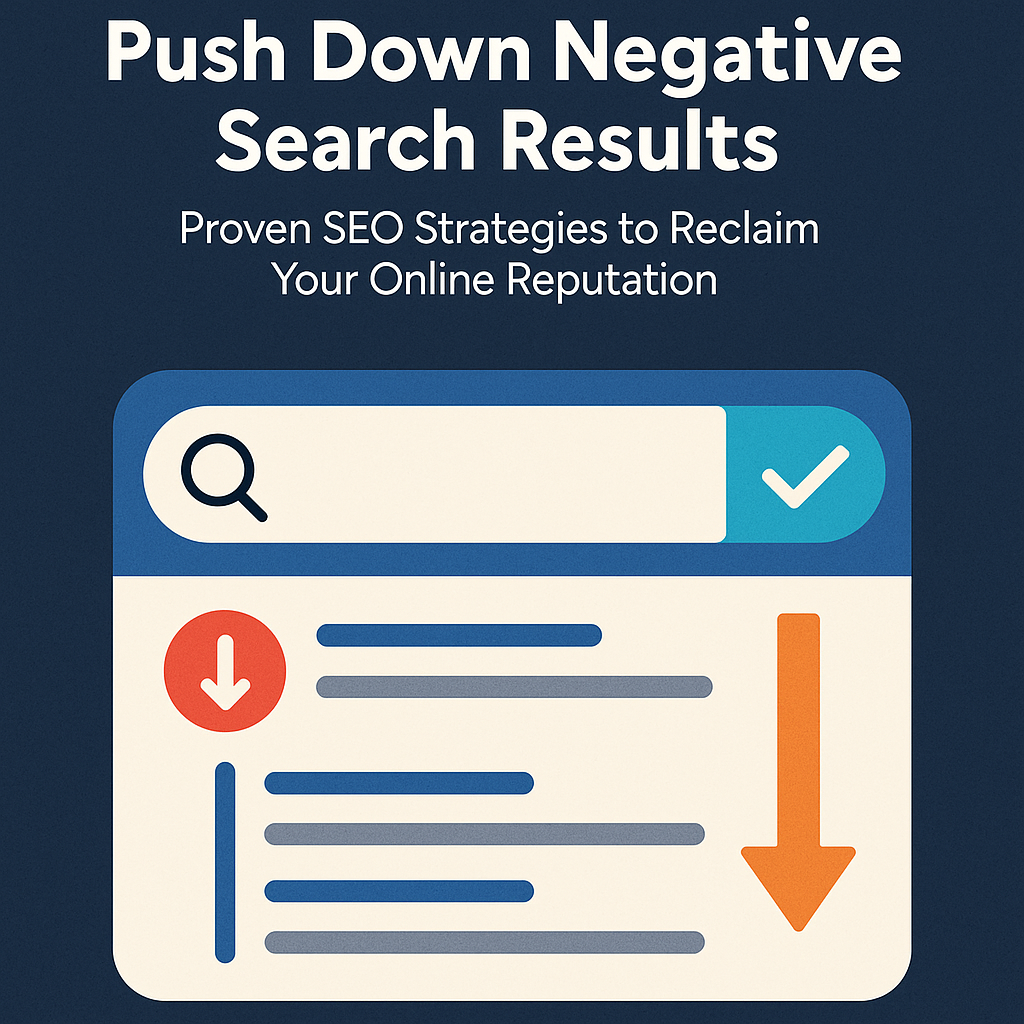
While deletion isn’t always possible, the solution lies in strategic SEO suppression—pushing negative results off the first page and replacing them with accurate, positive content.
Understanding Search Engine Suppression
Suppression doesn’t mean removing the content from the internet. It means demoting its visibility in search engine rankings.
Search engines like Google rank content based on relevance, authority, freshness, and engagement. By creating and amplifying better-performing content, you can bury harmful results under a wave of SEO-optimized pages that offer more value.
Core Strategies to Push Down Negative Search Results
1. Publish Authoritative Content That Outranks the Negative Result
Search engines reward well-structured, keyword-rich, and valuable content.
Best practices:
- Create in-depth blog posts targeting your name or brand.
- Use semantic keywords and LSI (latent semantic indexing) phrases.
- Answer commonly searched questions.
- Add images, video, and structured headings (H2/H3).
- Include outbound links to trusted sources and internal links to cornerstone pages.
Example: If “[Your Name] lawsuit” is showing up, publish an article titled “[Your Name]: Recent Community Leadership and Business Achievements.”
2. Leverage High-Domain-Authority Platforms
Post branded content on websites that already rank well:
- LinkedIn Articles
- Medium
- Crunchbase
- About.me
- Quora
- Reddit AMA sessions
Include backlinks to your homepage or main site using optimized anchor text.
3. Build Personal or Brand Microsites
Buy branded domains such as:
- yourfullname.com
- yourbusinessreputation.com
Then build out SEO-rich content with:
- Testimonials
- Press releases
- Portfolios
- Case studies
- Evergreen blog posts
Optimize meta descriptions and title tags using your full name or brand name to compete for branded keywords.
4. Claim and Optimize All Online Profiles
Get control of all your social and professional handles:
- Facebook, Twitter, Instagram, TikTok
- Crunchbase, AngelList, ProductHunt
- LinkedIn, GitHub, Dribbble
- Behance, Slideshare, Vimeo
Post regularly, complete bios, and add backlinks to your primary website. These profiles often rank in the top 10.
SEO Tactics That Drive Suppression Results
On-Page SEO
- Keyword placement in H1, H2, and meta descriptions
- Internal linking between your positive content pages
- Fast loading speeds
- Mobile-first design
- Use of alt tags on all images
- Strategic use of bullet points and short paragraphs
Off-Page SEO
- Backlinks from reputable sites
- Guest posts on niche blogs
- Local citations (Yelp, Yellow Pages, Google Business Profile)
- Press releases submitted to PR syndication services
- Participating in industry forums with signature links
Schema Markup
Add structured data for:
- Person
- Organization
- Local Business
- FAQPage and HowTo schemas where applicable
This enhances credibility in Google’s eyes and can help push trustworthy content higher.
Video SEO
YouTube videos optimized with your name can rank high fast. Use keyword-rich titles, video descriptions, and transcripts.
- Use playlists and timestamps
- Engage viewers in comments to boost watch time
Google Entity Creation
Establish yourself or your business as an entity by:
- Linking consistent social profiles
- Using consistent brand info (Name, Address, Phone)
- Getting listed in Wikidata or Crunchbase
The Psychology Behind First Page Perception
Most users never scroll past the first page of Google. In fact, studies show over 90% of searchers never go beyond page one. Why? Because users perceive top-ranked results as more trustworthy, authoritative, and credible—regardless of the actual content.
“The best place to hide a dead body is the second page of Google.” — Anonymous SEO proverb.
Understanding this behavior is critical. If your name or business is associated with negativity on page one, the damage begins before anyone clicks through.
Negative SEO: What It Is and How to Recognize It
You may be suffering from negative SEO attacks if:
- Spammy backlinks suddenly point to your site
- Someone clones your site content and republishes it
- You’re hit with false reviews or defamatory blog posts
- Your site rankings drop without cause
Protective steps:
- Use Google Search Console to monitor backlink activity
- Disavow harmful links
- Monitor mentions of your name/business using Google Alerts
- Regularly audit SERP results
The Role of AI in Search Engine Suppression
With AI-driven search enhancements (like Google’s SGE), suppression now involves semantic optimization and entity reinforcement.
AI-driven tactics:
- Use semantic SEO tools like SurferSEO or Clearscope
- Build topic clusters to reinforce topical authority
- Repurpose content into multiple formats: articles, YouTube, podcasts, LinkedIn carousels
By aligning with Google’s evolving AI understanding, you’re not just burying negativity—you’re reinforcing authority.
The Importance of E-E-A-T in Suppression Campaigns
Google’s algorithm favors content with Experience, Expertise, Authoritativeness, and Trustworthiness (E-E-A-T).
To increase E-E-A-T:
- Add author bios with credentials
- Link to expert sources and studies
- Showcase real reviews and testimonials
- Include case studies and proof of work
Higher E-E-A-T means your content is more likely to outrank untrustworthy or anonymous smear pieces.
Long-Term Maintenance for Suppression Campaigns
Once you’ve pushed down negative content, the work isn’t over.
Keep your content ecosystem healthy:
- Publish monthly blog posts with updated insights
- Monitor changes in SERP rankings via tools like SEMrush or Ahrefs
- Refresh old articles to keep them “fresh” in Google’s eyes
- Maintain social media activity and engagement
Remember, search rankings are fluid—if your efforts stop, old content can resurface.
Bonus Tools to Support Suppression
| Tool | Purpose |
|---|---|
| Google Search Console | Monitor site performance and backlinks |
| BrandYourself | Reputation monitoring and alerts |
| SEMrush | Keyword tracking and competitor monitoring |
| BuzzSumo | Track trending content to use in strategies |
| Archive.org | Find outdated versions of harmful posts |
| Hunter.io | Find outreach contacts for takedown or guest posts |
Content Ideas That Can Rank High
- “[Your Brand] Community Involvement Stories”
- “CEO Spotlight: [Your Name] on Innovation”
- “Customer Success with [Your Business]”
- Thought leadership on industry trends
- Product explainer videos
- Podcast guest appearances
- Testimonials from team or clients
- Event recaps and conference participation
- Partner and affiliate highlights
- Case studies with visual data
Legal Options to Remove Truly Harmful Content
While suppression works well, in certain cases you may have legal grounds to request a takedown.
Content Eligible for Legal Removal
- Defamation (false statements of fact)
- Revenge posts or doxxing
- Copyrighted material
- Content violating platform terms
Takedown Routes
- DMCA requests
- Cease and desist letters
- John Doe subpoenas
- Reporting through Google’s content removal form
Optimized Up Solutions to Suppress Negative Search Results
At Optimized Up, our team specializes in SEO suppression and content publishing strategies that effectively bury harmful search results.
Our services include:
- Custom ORM campaigns
- White-label suppression for agencies
- Legal takedown consulting
- SEO microsite networks
- Review suppression and monitoring
- Content development and backlink outreach
- Crisis PR response consulting
📞 Book a Free Strategy Session to assess your situation.
Frequently Asked Questions (FAQ)
Only if they violate Google’s policies (e.g., defamation, private data, or DMCA claims). Otherwise, suppression is the best route.
It can take 2–6 months depending on the authority of the negative content and aggressiveness of your SEO strategy.
Yes. If optimized correctly, your own domains can outrank third-party content.
If the content is legally actionable, a lawyer can help with takedown requests or lawsuits.
Costs vary based on the scope of your issue, but solutions can be tailored to your needs. Agencies like Optimized Up offer scalable plans.
Yes. Many employers Google candidates before interviews. Bad results can cost you opportunities.
Related Contents: