Online reviews are a powerful influence on consumer decisions. Yet, the temptation to manage reputation by only showcasing positive feedback has led many businesses to engage in review gating—a practice that may seem harmless but could get you into serious legal trouble.
This guide explores what review gating really means, why it’s a risk to your brand, how it violates trust and FTC guidelines, and the better, fully legal ways to manage reviews and build a transparent reputation.
What Is Review Gating?
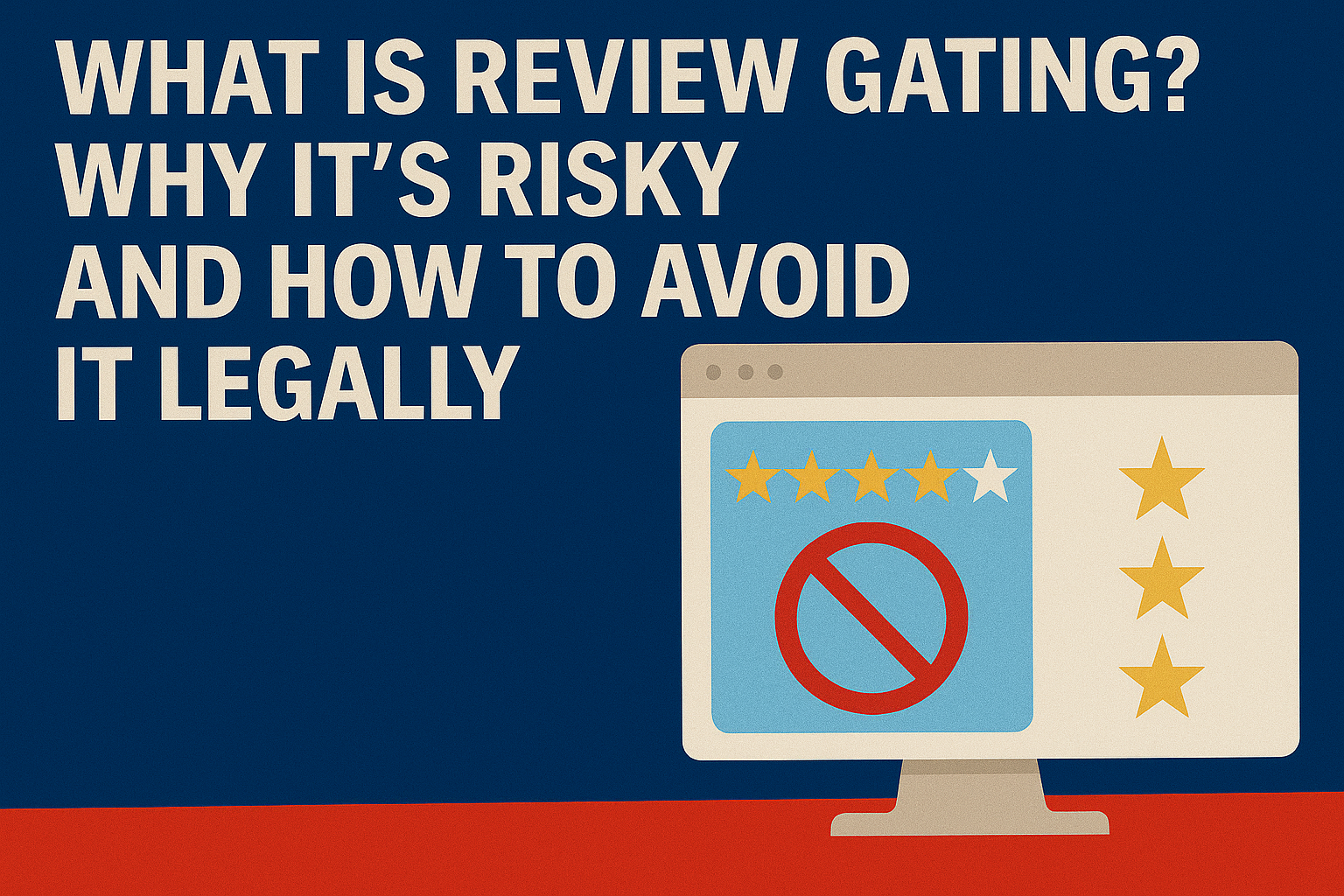
Review gating is the process of filtering customers before asking them to leave a review. Typically, businesses use surveys or email prompts to determine whether a customer had a positive or negative experience. If the customer expresses satisfaction, they are encouraged to leave a public review. If not, they’re directed to private feedback instead.
Examples of Review Gating:
- Sending a follow-up email that asks: “Were you happy with your service?”
- If the answer is yes, the next screen asks them to leave a Google review.
- If no, it redirects them to a customer service form.
- Using third-party tools that filter satisfied customers to public review platforms and route unhappy customers to internal support.
Why Review Gating Is Problematic
1. It’s Misleading
Consumers trust review platforms to reflect a balanced perspective. Review gating manipulates this ecosystem by suppressing critical reviews and skewing ratings.
2. It’s Against Platform Policies
Most major platforms prohibit review gating:
- Google Business Profile guidelines strictly forbid soliciting reviews selectively.
- Yelp warns against any form of solicitation that biases review content.
- Trustpilot and TripAdvisor also prohibit gating tactics.
“Don’t discourage or prohibit negative reviews.” – Google Business Profile Policies
3. It Violates FTC Rules
In 2019, the Federal Trade Commission (FTC) issued guidance clarifying that review gating is considered deceptive marketing.
Companies caught using gating mechanisms can face:
- Hefty fines
- Reputation damage
- Public enforcement actions
- Mandatory public disclosure and compliance audits
4. It Damages Long-Term Trust
Gated review systems create a false sense of security. When real customers eventually leave negative reviews (and they will), the business appears dishonest.
Review Gating vs. Legitimate Review Generation
Not all forms of review collection are review gating. It’s legal—and encouraged—to ask all customers for reviews. The issue arises when only happy customers are asked publicly, while negative feedback is hidden.
Legal Review Generation Best Practices:
- Ask for reviews uniformly (without screening first)
- Use neutral, non-pushy language
- Invite feedback from all customers regardless of sentiment
- Display all reviews or none at all
Review Gating and Google’s Policy
Google’s review policy makes it clear:
- Selectively soliciting positive reviews is a violation
- Businesses must not discourage negative reviews
- Filtering or funneling customers based on sentiment is considered deceptive
Google My Business suspensions, review purges, and account flagging are common consequences.
Common Enforcement Actions:
- Google may remove hundreds of reviews in a single enforcement sweep
- Suspensions can take weeks to appeal
- Review history impacts local SEO and visibility
Legal Precedents and Enforcement
Notable Enforcement Actions:
- In 2022, the FTC fined Fashion Nova $4.2 million for review suppression
- Sunday Riley faced enforcement for faking reviews and manipulating feedback
- HomeAdvisor and others have received warnings for unfair marketing practices
Key FTC Language:
“Businesses cannot pick and choose which reviews to publish. If they invite reviews, they must present them fairly and transparently.” – FTC Guidelines
How to Ask for Reviews the Right Way
Do:
- Ask every customer for feedback
- Use consistent language across channels
- Make it easy with direct links to Google, Yelp, or Facebook
- Thank all reviewers, regardless of sentiment
Don’t:
- Pre-screen or filter reviews
- Offer incentives for only positive feedback
- Pressure users into 5-star responses
- Use emotional manipulation to solicit praise
Best Practices to Build Authentic Reputation
1. Use Feedback to Improve, Not Just Promote
Encourage open-ended comments. Show customers that feedback—positive or negative—is valued.
2. Showcase Reviews Transparently
Embed reviews directly on your website. Use review widgets that don’t filter based on sentiment.
3. Respond to All Reviews
Engaging with reviewers humanizes your brand and demonstrates a commitment to customer care.
4. Monitor Review Profiles Weekly
Set alerts for new reviews. Platforms like Google Alerts, Reputology, and ReviewTrackers help automate this.
5. Train Staff for Customer Experience
Prevention is the best strategy. Empower your team to resolve issues before they become negative reviews.
Tools That Avoid Review Gating
Avoid platforms that gate or screen responses. Look for tools that comply with FTC and platform guidelines.
Recommended Tools:
- GatherUp (non-gating, customizable workflows)
- Grade.us (FTC-compliant, review funneling with transparency)
- Podium (great for uniform text message review outreach)
- Birdeye (advanced automation without screening logic)
- Trustpilot Business Tools (fully transparent review collection)
How Review Gating Hurts Local SEO
Google uses review content as a ranking factor for local search. Gated reviews may:
- Lead to account flagging or suspension
- Cause a drop in visibility or loss of verified reviews
- Trigger algorithmic penalties for review manipulation
- Reduce the variety of natural keywords found in authentic feedback
SEO Warning:
Google also cross-validates reviews with consumer behavior and bounce rate data. Overly positive, gated review profiles can appear suspicious.
How Optimize Up Helps Businesses Stay Compliant
At Optimize Up, we help you generate honest, effective feedback while staying compliant:
- Review generation campaigns with transparency
- Response templates for review engagement
- Audit and cleanse gated systems
- Long-term review growth strategies
- Local SEO optimization without review manipulation
Want to strengthen your reputation the right way? Contact Optimize Up to future-proof your review strategy.
Frequently Asked Questions
It’s not a crime, but it violates FTC guidance and can result in fines, suspensions, and legal exposure.
Filtering is asking only satisfied users to post reviews. Follow-up means checking in with everyone, regardless of satisfaction.
Yes. In fact, publicly responding shows professionalism and care.
You can use it, but not as a substitute for public transparency. Never use it to suppress negative sentiment.
Stop gating immediately, open review channels, and ask all past clients for reviews without filtering. You may also need a professional audit.
Possibly in the short term—but it improves long-term credibility and trust, which boosts visibility and conversions.
Yes. Yelp, Trustpilot, and Facebook may issue account warnings, suppress pages, or revoke public listing benefits.