Estimated reading time: 6 minutes
What Webpage Removal Actually Means in Practice
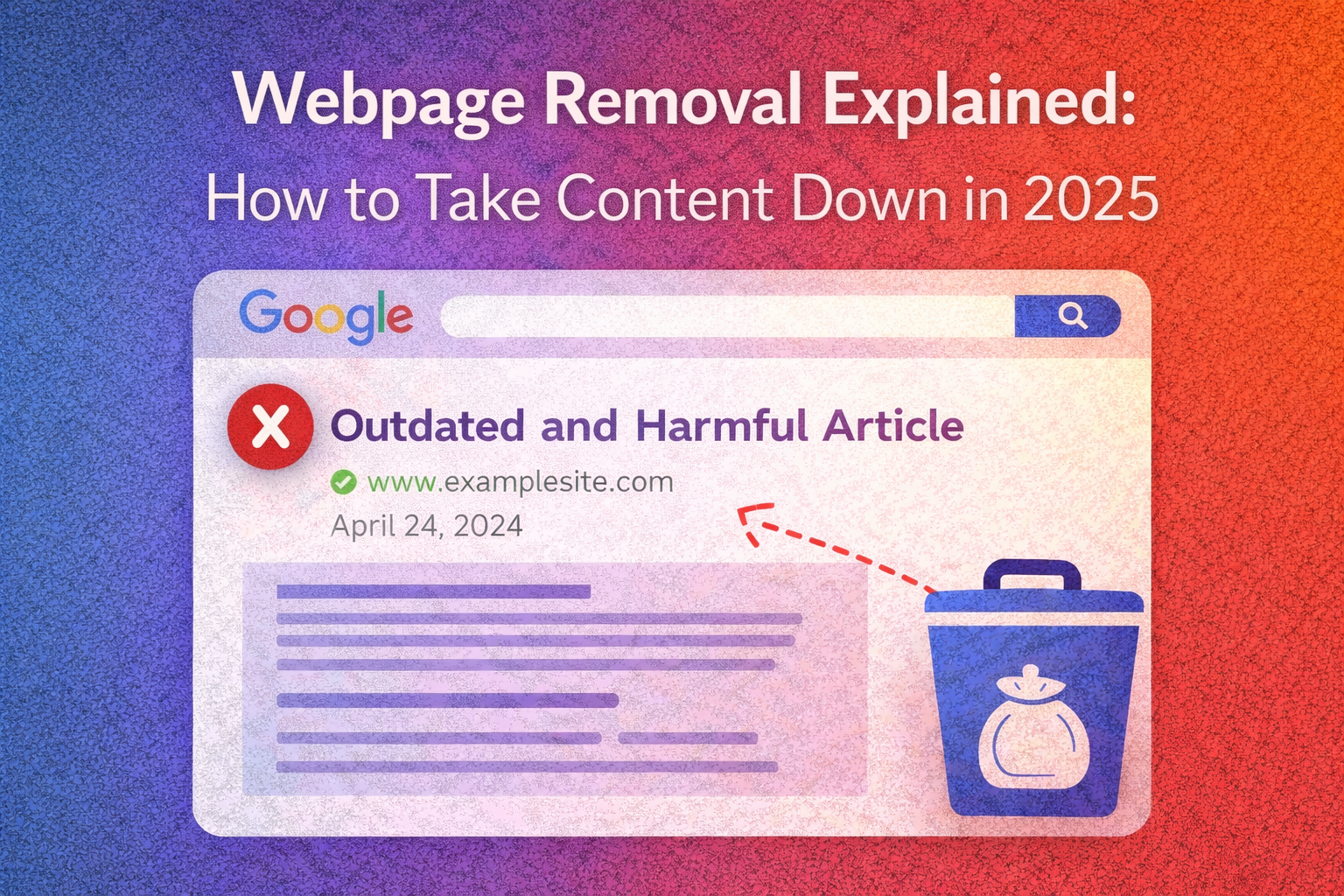
Webpage removal is often misunderstood. Many people assume it means erasing content from the internet entirely. In reality, webpage removal can refer to several different outcomes, each with its own rules, limitations, and likelihood of success.
Common interpretations of webpage removal include:
- Deleting a page at the source
- Removing a page from search engine results
- Blocking a page from being indexed
- Reducing a page’s visibility through suppression
Understanding which outcome applies to your situation determines which strategies will work and which will fail.
Why Removing a Webpage Is So Difficult
The internet is designed to preserve information, not erase it. Once content is published and indexed, it is often cached, archived, copied, or referenced elsewhere. Even if a page disappears from one location, traces may remain.
Search engines do not act as editors or judges of fairness. They rank and index content based on relevance, authority, and compliance with policy. Google explains this philosophy clearly in its guidance on creating helpful, reliable content.
Because of this, most webpage removal efforts fail unless they meet very specific criteria.
The Three Main Paths to Webpage Removal
Nearly every removal effort falls into one of these categories:
- Source-level removal
- Search engine removal or deindexing
- Suppression through stronger content
Each path has different requirements, timelines, and success rates.
Source-Level Removal: The Most Effective Option
Removing a webpage at the source is the most complete form of removal. If the page no longer exists, search engines will eventually drop it from their indexes.
Source-level removal works best when:
- You own the website
- The publisher agrees to remove or update content
- The page violates platform rules
- Information is factually incorrect
If you control the website, removal is straightforward. If you do not, persuasion and evidence are required.
Requesting Removal from a Publisher
When contacting a publisher, professionalism matters.
Effective requests typically include:
- The exact URL
- Clear explanation of the issue
- Evidence of inaccuracy or harm
- Respectful, non-threatening language
Publishers are more likely to cooperate when requests are factual and concise rather than emotional or accusatory.
When Publishers Are Unlikely to Remove Content
Most publishers refuse removal when content:
- Is factually accurate
- Falls under opinion or commentary
- Is part of public record
- Does not violate internal policies
Even when content feels unfair, it may still be protected editorially.
Search Engine Removal: What Google and Bing Will Do
If a webpage cannot be removed at the source, the next option is search engine removal. This does not delete the page from the internet; it only removes it from search results.
Search engines remove content only under strict conditions.
When Google Will Remove a Webpage from Search
Google may remove content that includes:
- Sensitive personal information
- Explicit imagery shared without consent
- Identity theft or fraud
- Legal violations
- Court orders
These criteria are outlined in Remove Information You Believe Is Harmful.
Reputation damage alone is not enough.
When Google Will Not Remove Content
Google generally refuses removal when content:
- Is accurate
- Appears on news or editorial sites
- Expresses opinion
- Is lawfully published
This applies even if content is outdated or damaging.
Bing and Other Search Engines
Bing follows similar principles, with some privacy-focused nuances. Removal requests are still limited and policy-driven, as discussed in How to Remove Search Results from Bing.
Across search engines, suppression is often more reliable than removal.
Temporary vs. Permanent Deindexing
Some removal tools only hide content temporarily.
Temporary removals:
- May expire
- Do not remove cached copies permanently
- Can reappear if the page remains live
Permanent deindexing usually requires source removal or long-term suppression.
Suppression: The Strategy That Works Most Often
Suppression reduces visibility by outranking unwanted pages with stronger, more relevant content.
Why suppression works:
- Most users never go past page one
- Search engines favor authority and freshness
- Multiple assets dilute single pages
Suppression aligns with how ranking systems operate rather than fighting them.
How Suppression Works Step by Step
Effective suppression relies on:
- Publishing authoritative content
- Optimizing owned assets
- Strengthening entity clarity
- Maintaining consistency
Over time, search engines replace weaker pages with stronger alternatives.
Creating Content That Pushes Pages Down
High-performing suppression content includes:
- Personal or business websites
- Biography or “About” pages
- Educational articles
- FAQs addressing context
- Media features
Each asset should naturally reference the relevant name, brand, or topic.
Name-Based and Topic-Based Suppression
Suppression strategies differ depending on what ranks.
Common scenarios include:
- Personal name searches
- Brand name searches
- Topic-specific queries
- Phone number searches
Tailoring content to match the search query is essential.
Using Profiles and Directories Strategically
High-authority profiles often rank quickly.
Examples include:
- Crunchbase
- About.me
- Professional directories
Complete, consistent profiles help search engines understand identity and relevance.
The Role of Freshness in Webpage Removal
Fresh content signals relevance.
Publishing new, authoritative material helps:
- Reduce reliance on old pages
- Shift narrative focus
- Update search perception
This is especially effective for outdated articles or listings.
Multimedia as a Suppression Tool
Search results increasingly feature non-text content.
Effective formats include:
- Videos
- Images
- Slide decks
Multimedia assets can outrank text-only pages when engagement is strong.
Legal Options and Webpage Removal
Legal action may apply when content involves:
- Defamation with provable falsehood
- Privacy violations
- Intellectual property misuse
Even in valid cases, legal removal is slow and costly. Many situations are better addressed through suppression.
Ethical Boundaries You Should Never Cross
Ethical webpage removal avoids:
- Fake profiles
- False claims
- Impersonation
- Manipulative link schemes
Search engines penalize deceptive tactics, often worsening visibility.
Common Webpage Removal Mistakes
Avoid these pitfalls:
- Filing baseless takedown requests
- Attacking publishers publicly
- Publishing thin or duplicate content
- Expecting instant results
These actions often amplify attention rather than reduce it.
How Long Webpage Removal or Suppression Takes
Timelines vary based on competition and authority.
Typical ranges:
- Low competition: 1–3 months
- Moderate competition: 3–6 months
- Complex cases: 6–12 months
Consistency matters more than speed.
How Optimized Up Approaches Webpage Removal
Optimized Up helps individuals and businesses navigate webpage removal using ethical, search-aligned strategies.
Our solutions support:
- Removal feasibility audits
- Publisher outreach guidance
- Suppression strategy development
- Content creation and optimization
- Long-term visibility monitoring
Optimized Up focuses on sustainable outcomes rather than risky shortcuts.
Turning a Removal Challenge into Long-Term Control
Even when full removal isn’t possible, control is achievable.
By building authority and clarity, unwanted pages lose influence over time. This approach supports broader strategies discussed in How to Manage Google Search Results.
Preparing for Webpage Removal Challenges in the Future
As content volume increases, removal becomes harder—not easier.
Future success depends on:
- Proactive reputation management
- Ongoing content ownership
- Entity clarity across platforms
Waiting for a crisis limits options.
Taking Action the Right Way in 2025
Webpage removal is rarely simple, but it is manageable with the right strategy.
Understanding when removal is possible—and when suppression is smarter—prevents wasted effort and frustration.
If you need expert guidance tailored to your situation, Optimized Up is ready to help.
Visit OptimizeUp.com to start protecting your visibility and reputation.
Frequently Asked Questions
Only if the source deletes it. Search engines cannot erase content globally.
No. Content must violate specific policies.
Yes. Ethical suppression aligns with how search engines rank content.
Most cases show progress within a few months.
Yes. Optimized Up provides ethical, effective solutions.
MLA-Formatted Citations
“Creating Helpful, Reliable Content.” Google Search Central, https://developers.google.com/search/docs/fundamentals/creating-helpful-content.
“Remove Information You Believe Is Harmful.” Google Support, https://support.google.com/websearch/troubleshooter/3111061.
“Search Engine Optimization (SEO) Starter Guide.” Google Search Central, https://developers.google.com/search/docs/fundamentals/seo-starter-guide.
Related Contents: