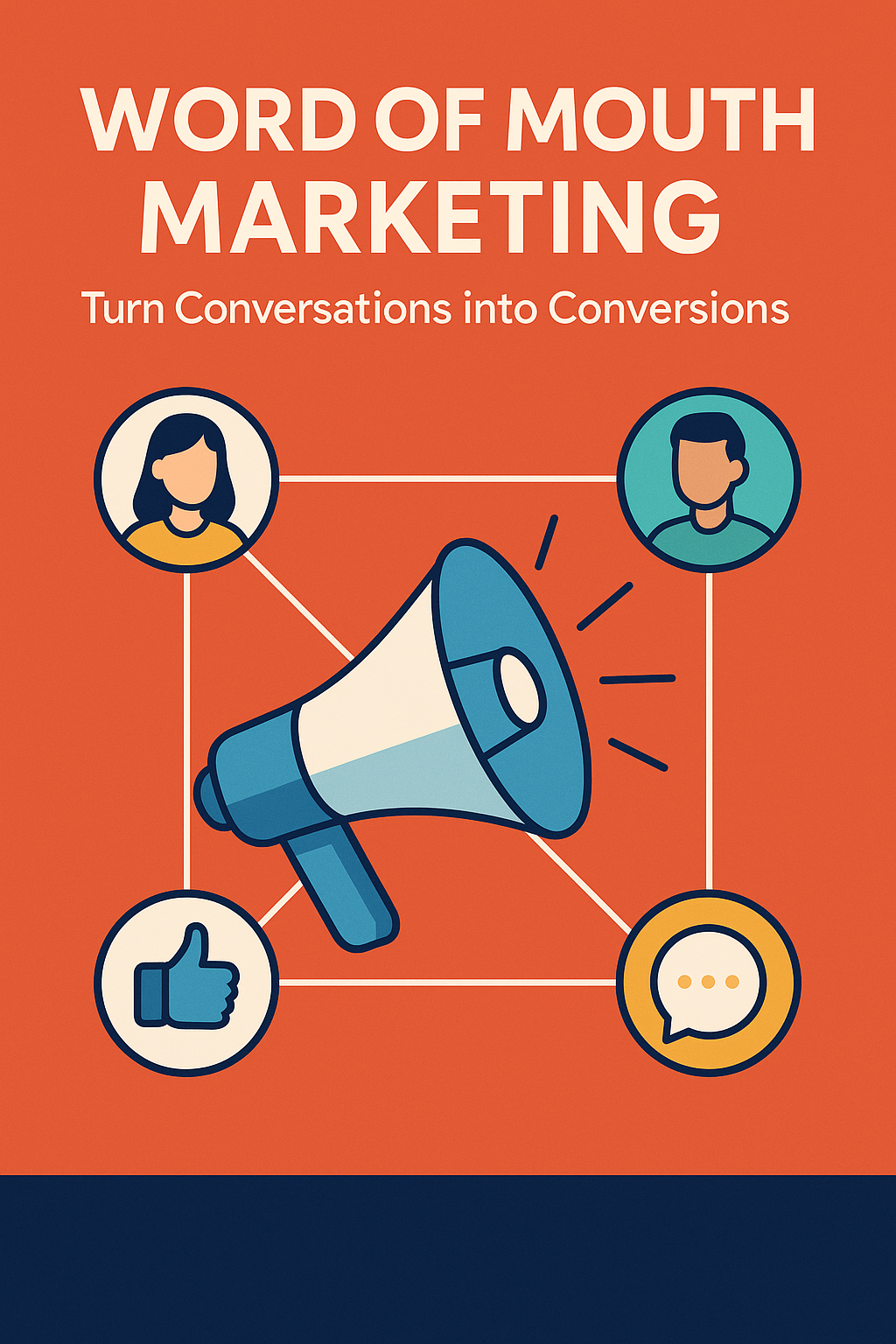
Why Word of Mouth Marketing Works Better Than Paid Ads
In an age of skepticism and ad blockers, trust is the ultimate currency. That’s why word of mouth marketing (WOMM) continues to outperform traditional campaigns. A recommendation from a friend, colleague, or influencer feels real—because it is.
Key WOMM Stats That Matter:
- 92% of consumers trust referrals from people they know (Nielsen)
- Word of mouth drives $6 trillion in annual global spending (McKinsey)
- Referred customers are 4x more likely to convert
- Consumers are 90% more likely to buy from a brand recommended by a friend (HubSpot)
What Is Word of Mouth Marketing?
Word of mouth marketing is the practice of actively encouraging and influencing natural discussions about a brand, product, or service. Unlike organic word of mouth (which is spontaneous), WOMM is strategic.
Core Elements:
- Trust-based communication
- Peer-to-peer influence
- Viral and shareable triggers
It’s about creating memorable experiences that customers feel compelled to talk about, online or offline.
Types of Word of Mouth Marketing
1. Organic WOM
Happens when customers freely talk about a product without brand involvement. Typically based on delight, dissatisfaction, or surprise.
2. Amplified WOM
Occurs when brands encourage or incentivize discussions. Includes referral programs, user-generated content (UGC), and influencer seeding.
3. Experiential WOM
Triggered by remarkable customer experiences or unexpected brand gestures that spark stories worth retelling.
4. Viral WOM
Involves campaigns engineered to spread fast due to humor, emotion, shock, or exclusivity (e.g., Dropbox’s early invite-only model).
5. Employee Advocacy
Internal word of mouth happens when your own employees share brand love—on LinkedIn, Twitter, or via speaking engagements. It humanizes your brand.
Benefits of Word of Mouth Marketing
- Builds long-term brand loyalty
- Lowers customer acquisition cost (CAC)
- Creates high-converting traffic
- Increases average customer lifetime value (CLV)
- Improves reputation and brand sentiment organically
- Adds authenticity to your marketing efforts
“Word of mouth isn’t just marketing. It’s reputation in motion.”
Proven Strategies to Turn Conversations into Conversions
1. Create a Talkable Brand Moment
Customers don’t talk about good service. They talk about exceptional experiences.
Examples:
- Handwritten thank-you notes
- Surprise upgrades
- Over-delivering on support
2. Launch a Referral Program
Make it easy for people to share.
Example: Get $10 for every friend you refer. They get $10 too.Platforms to use:
- ReferralCandy
- Friendbuy
- Yotpo
3. Empower User-Generated Content (UGC)
Ask happy customers to:
- Share their story on Instagram
- Post before/after photos
- Leave a review on YouTube or Reddit
Create branded hashtags and run seasonal challenges to keep engagement high.
4. Partner with Micro-Influencers
Micro-influencers (1K–100K followers) have tighter, more engaged communities than big names. They’re ideal for trust-based marketing.
Choose influencers whose values and audience match yours—not just based on follower count.
5. Use Brand Ambassadors
Turn loyal customers into evangelists by offering:
- Early access to new products
- Exclusive discount codes
- Affiliate revenue
Create a dashboard or leaderboard for community recognition.
6. Seed Surprise & Delight Campaigns
Send unexpected gifts or gestures to superfans, influencers, or top customers. Encourage them to share the experience.
7. Encourage Online Reviews
Make the process seamless. Include links in:
- Post-purchase emails
- SMS follow-ups
- Thank-you pages
Incentivize ethically with coupons or loyalty points.
Word of Mouth Triggers That Drive Buzz
- Emotion: Joy, outrage, awe
- Novelty: New, unique, limited edition
- Storytelling: Easy-to-share narratives
- Identity: Makes the sharer look smart or cool
- Social proof: Seeing others do it creates FOMO
Train your team to identify and amplify these moments during customer interactions.
Tools to Support Your WOM Campaign
- BuzzSumo: Discover trending topics and brand mentions
- Mention: Monitor what people say about you
- LoyaltyLion: Build referral + loyalty workflows
- Canva: Create UGC templates
- Postscript or Klaviyo: SMS/email follow-ups with share prompts
- TINT or Stackla: Aggregate UGC across platforms for campaigns
Word of Mouth and SEO: An Overlooked Connection
While WOMM isn’t about keyword stuffing, it directly influences SEO through:
- Brand mentions on social and editorial sites
- High-authority backlinks via UGC
- Search queries for “brand name + review” or “is [brand] legit”
- Improved dwell time from high-intent traffic
Pair WOMM with reputation management to keep brand perception clean across platforms.
Real Examples of Word of Mouth Marketing
Airbnb:
Used referrals to drive massive early adoption. Each friend you invited earned you travel credit.
Warby Parker:
Encouraged customers to share try-on photos via hashtag. Turned glasses into shareable fashion.
Tesla:
No traditional ads. Relies on customers and fans to spread word via social media and test ride referrals.
Glossier:
Built an empire on peer recommendations, customer selfies, and community feedback loops.
Chipotle:
Sparked viral buzz through memes, social challenges, and surprise rewards.
Common Mistakes to Avoid
- Incentivizing fake reviews
- Over-engineering referral programs
- Ignoring negative word of mouth
- Forgetting to track and measure UGC and referral data
- Using generic influencer campaigns that feel inauthentic
Why OptimizeUp Is Built for Reputation-Driven Growth
At OptimizeUp, we don’t just fix reputations. We help brands build word of mouth machines that:
- Generate UGC and authentic brand mentions
- Create campaigns that people actually talk about
- Monitor conversations that matter
- Suppress damaging results and boost trust signals
- Align WOM strategies with SEO and brand positioning
Let us audit your reputation strategy and create a WOM roadmap tailored to your brand.
Frequently Asked Questions
Yes. Peer-to-peer trust in professional circles can be even stronger than in B2C. Client case studies, LinkedIn recommendations, and referrals drive most high-ticket B2B deals.
Retail, SaaS, hospitality, education, fitness, finance, and healthcare all see major benefits.
Track:
Referral traffic
Direct website visits
Branded search queries
Social shares and mentions
Net Promoter Score (NPS)
UGC volume and engagement
Yes. With systems like ambassador programs, content campaigns, and referral automation, WOMM can scale sustainably.
Yes—but focus on genuine value. Store credit or tiered VIP perks often outperform cash incentives.
Absolutely. Activating your most loyal fans during a PR issue can balance the narrative and build public trust.
MLA Citations
“Global Trust in Advertising.” Nielsen, https://www.nielsen.com/us/en/insights/article/2015/global-trust-in-advertising/. Accessed 13 May 2025.
“A New Way to Measure Word of Mouth Marketing ROI.” McKinsey & Company, https://www.mckinsey.com/business-functions/marketing-and-sales/our-insights/a-new-way-to-measure-word-of-mouth-marketing-roi. Accessed 13 May 2025.
“The Power of Micro-Influencers.” Forbes, https://www.forbes.com/sites/forbesagencycouncil/2022/10/14/the-power-of-micro-influencers/?sh=5c920e7e793f. Accessed 13 May 2025.
“Understanding UGC in Marketing.” HubSpot, https://blog.hubspot.com/marketing/user-generated-content-examples. Accessed 13 May 2025.
“What is Word of Mouth Marketing?” WordStream, https://www.wordstream.com/blog/ws/2020/11/04/word-of-mouth-marketing. Accessed 13 May 2025.