Estimated reading time: 6 minutes
What Is Bandwagon Propaganda?
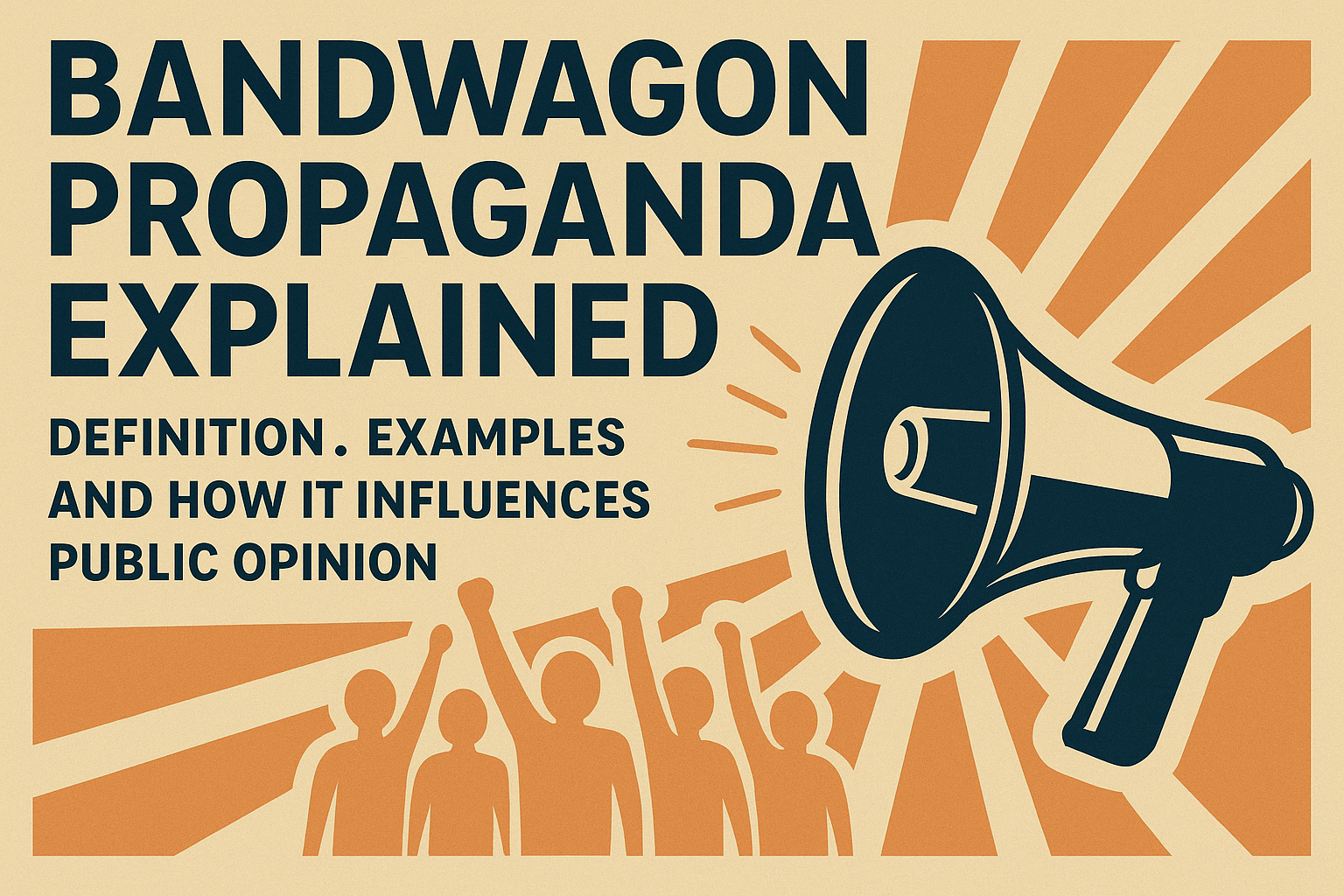
Bandwagon propaganda is a persuasive technique that encourages people to adopt a behavior, belief, or trend because “everyone else is doing it.” It appeals to the human desire to conform and belong to a group, making individuals feel left out if they don’t join in.
This method leverages peer pressure and the fear of missing out (FOMO), often used in marketing, political campaigns, social movements, and media narratives.
Key Characteristics:
- Appeals to group mentality
- Creates urgency through popularity
- Implies that non-conformity equals being left behind
“If you’re not with us, you’re against us” — a classic example of bandwagon rhetoric.
Origins of Bandwagon Propaganda: Historical Context
The term “bandwagon” originates from 19th-century American politics. Politicians would ride on bandwagons during parades to garner attention. As more supporters jumped onto the moving wagon, it became a symbol of gaining momentum and public favor.
Notable Early Uses:
- P.T. Barnum’s Circus Parades: Barnum’s marketing genius capitalized on crowds following the bandwagon, later inspiring political campaigns.
- Election Campaigns in the 1800s: Candidates used literal bandwagons to rally supporters, creating a visual spectacle of popularity.
The Psychology Behind Bandwagon Propaganda
Understanding why people fall for the bandwagon effect requires delving into psychological concepts:
1. Social Proof
Humans look to others for cues on how to behave, especially in uncertain situations. If many people endorse something, it must be valid.
2. Fear of Missing Out (FOMO)
The anxiety that others are enjoying experiences or benefits without you drives impulsive decisions.
3. Desire for Acceptance
People have an innate desire to belong to a group. Bandwagon appeals tap into this longing for social inclusion.
4. Cognitive Shortcuts (Heuristics)
Rather than thoroughly evaluating every decision, humans rely on mental shortcuts. “Everyone’s doing it” becomes a heuristic for making quick choices.
5. Groupthink Phenomenon
Bandwagon propaganda fosters groupthink, where individuals prioritize harmony over critical assessment. This suppresses dissent and promotes blind conformity.
Historical Examples of Bandwagon Propaganda
Political Campaigns:
- World War I & II Posters: “Join the winning side” posters urged citizens to enlist or support the war effort.
- Political Rallies: Mass rallies showing huge supporter turnouts create an illusion of widespread popularity.
Advertising:
- Pepsi’s “Join the Pepsi Generation” Campaign: Made consumers feel part of a cool, modern movement.
- Apple’s Product Launch Lines: Images of long queues became symbolic of Apple’s must-have product status.
Social Movements:
- Viral Hashtag Campaigns: Movements like #MeToo gained momentum as more individuals joined, pressuring others to participate.
Bandwagon Propaganda in Modern Marketing
Brands extensively use bandwagon tactics to drive consumer behavior:
Strategies Include:
- “Best-Seller” Labels Products marketed as top-sellers signal social proof.
- Influencer Endorsements Influencers act as catalysts for mass adoption.
- User-Generated Content Campaigns Encouraging users to share experiences increases communal participation.
- Flash Sales & Limited-Time Offers Leveraging FOMO with phrases like “selling out fast” compels impulsive buying.
- Social Media Challenges Challenges like the Ice Bucket Challenge spur virality through collective participation.
Case Study: TikTok Trends
TikTok’s algorithm amplifies bandwagon propaganda by pushing viral trends into user feeds. Once a challenge or product gains traction, more creators hop on, accelerating adoption.
Bandwagon Propaganda in Politics and Media
Political entities and media outlets utilize bandwagon strategies to sway public sentiment:
Political Applications:
- Poll Results: Highlighting favorable polls to create an impression of inevitable victory.
- Crowd Shots at Events: Television broadcasts showcasing massive crowds signal mass approval.
- Repetition of Popular Slogans: Chanting slogans like “Hope and Change” or “Make America Great Again” reinforces unity.
Media Manipulation:
- Trending News Stories: Platforms prioritize popular stories, implying importance.
- Selective Reporting: Emphasizing particular narratives that align with mainstream opinions.
Example: The “Red Wave” Narrative
In recent elections, media pushed the idea of an impending “Red Wave,” influencing public expectations. Despite varying poll data, this narrative shaped voter turnout and public perception.
The Influence of Bandwagon Propaganda on Public Opinion
Bandwagon propaganda impacts public opinion by:
- Normalizing Ideas: The more people are shown adopting a belief, the more normalized it becomes.
- Suppressing Dissent: People fear social backlash if they oppose a popular trend.
- Accelerating Trends: Viral phenomena gain speed as more people jump on the bandwagon.
- Creating False Consensus: Media portrayal can exaggerate support levels, swaying neutral observers.
- Shaping Consumer Preferences: In product marketing, it nudges undecided consumers to favor “popular” choices.
Psychological Experiments Supporting Bandwagon Effect:
- Solomon Asch Conformity Experiments (1950s): Demonstrated individuals conforming to majority opinions even when obviously incorrect.
- Festinger’s Social Comparison Theory: People evaluate their own opinions by comparing them to others, especially when uncertain.
Negative Consequences of Bandwagon Propaganda
While effective, bandwagon propaganda has downsides:
- Suppresses Critical Thinking: People accept ideas without scrutiny.
- Spreads Misinformation Quickly: False narratives can gain traction rapidly.
- Manipulates Elections and Public Policy: Creates misleading perceptions of public support.
- Commercial Overconsumption: FOMO-driven buying leads to waste and regret.
- Polarizes Public Discourse: By amplifying dominant narratives, minority views are marginalized.
How to Recognize and Resist Bandwagon Propaganda
Spotting Bandwagon Tactics:
- Does the message emphasize popularity or widespread acceptance?
- Are dissenting opinions being downplayed or ridiculed?
- Is there an urgency to conform?
- Is the focus on numbers (“millions already joined”) rather than substance?
Strategies to Resist:
- Pause Before Reacting
- Seek Alternative Perspectives
- Evaluate Evidence Objectively
- Ask: Who Benefits from My Conformity?
- Stay Aware of Emotional Triggers
Critical Thinking Habits:
- Fact-check viral content before sharing
- Engage in diverse media consumption
- Discuss differing viewpoints respectfully
- Reflect on personal biases
How Optimize Up Can Help Manage Online Narratives
Bandwagon propaganda can significantly shape an individual’s or a brand’s online reputation. Optimize Up specializes in countering misinformation and controlling online narratives.
Our Solutions Include:
- Strategic reputation management
- Monitoring of viral misinformation
- Content creation that reclaims your brand narrative
- Search result suppression for negative trends
- Proactive privacy protection
🚀 Facing a reputation crisis fueled by online bandwagon effects? Contact Optimize Up for a personalized reputation recovery plan.
FAQ: Bandwagon Propaganda
A persuasive technique that encourages individuals to join in because “everyone else is doing it.”
Peer pressure is direct influence from people in your social circle. Bandwagon propaganda is a broader societal push through media, marketing, and public narratives.
Not necessarily. It can be positive when used for social good (e.g., encouraging recycling or public health initiatives), but it becomes harmful when it suppresses critical thinking or spreads misinformation.
By creating an illusion of overwhelming support, it influences undecided voters and suppresses dissenting voices.
Metrics like social media trends, polling data, and viral content analytics can track bandwagon influence.
When brands advertise a product as “America’s #1 Choice” or “Most Popular in its Category,” they’re leveraging the bandwagon effect to sway consumer preferences.
Algorithms prioritize content with high engagement, which rapidly amplifies popular narratives, encouraging more people to jump on the trend.
MLA Citations
Cialdini, Robert. Influence: The Psychology of Persuasion. Harper Business, 2021.
Cherry, Kendra. “What Is the Bandwagon Effect?” Verywell Mind, 2024, https://www.verywellmind.com/what-is-the-bandwagon-effect-2795895
Le Bon, Gustave. The Crowd: A Study of the Popular Mind. Dover Publications, 2023.
American Psychological Association. “Social Proof and Its Influence on Consumer Behavior.” APA Insights, 2023, https://www.apa.org/news/press/releases/2023/social-proof-behavior
Asch, Solomon E. “Opinions and Social Pressure.” Scientific American, vol. 193, no. 5, 1955, pp. 31–35.
Festinger, Leon. A Theory of Social Comparison Processes. Human Relations, 1954.
Related Contents: